
Role:
UI/UX Designer
Company:
Cirhss
Tool:
Figma
Revitalizing Balinese Language Through Digital Innovation
Things you need to know about Balinese language
The Balinese language follows a hierarchical system based on social interactions, including interactions among different castes. This means that when communicating with someone from a higher caste, the use of a higher form of language is considered significant. Additionally, each region in Bali has its own unique words and expressions, many of which are not found in other areas, adding to the richness and diversity of the language.
Why the team did this?
The Balinese language is a vital part of Bali's cultural heritage, but preserving it has become increasingly challenging. The existing dictionary is still in book form, which limits accessibility and makes updates cumbersome. Furthermore, the data is incomplete, and each region in Bali has unique words that are not documented comprehensively. To address these challenges, we set out to modernize and expand the Balinese dictionary, transforming it into a dynamic, community-driven digital resource.
What’s challenging in the process?
Language is far more intricate than we initially anticipated. During the development process, we encountered:
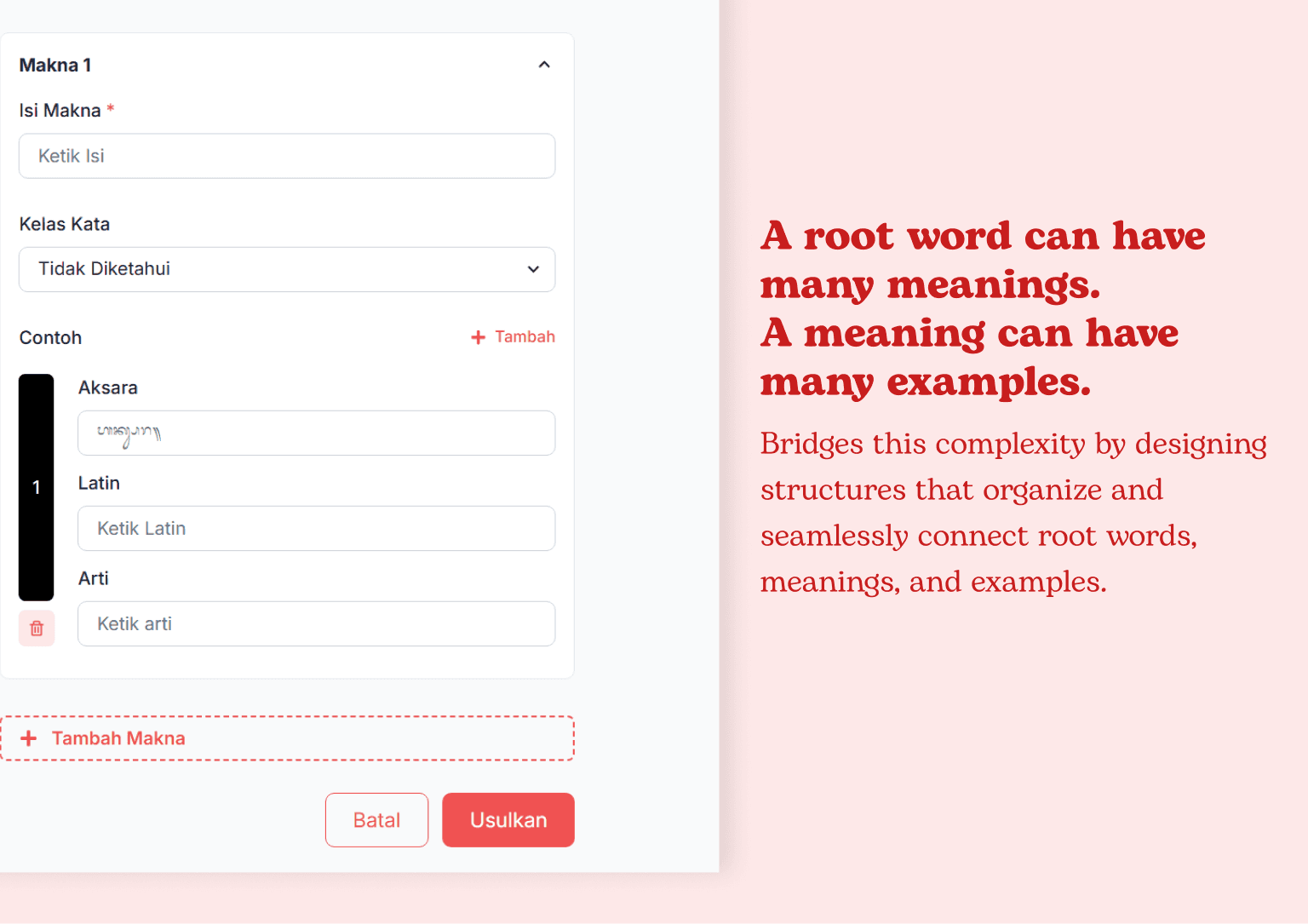
Polysemy: A single root word can have multiple meanings that vary depending on context, usage, or even regional interpretations. This complexity required us to design a system that could accommodate and display all possible meanings while maintaining clarity for the user. For example, a root word might mean something entirely different in formal versus casual settings, making accurate categorization essential.
Synonymy: One meaning can be represented by diverse examples, creating a need for detailed cross-references and synonyms. This is particularly challenging when examples overlap with other meanings, requiring careful distinction to avoid confusion. Synonymy also highlights the richness of the Balinese language, where a single concept may have a variety of expressions influenced by local culture.
Morphological Complexity: Derivative words often have varied meanings and examples, adding layers of intricacy. A single derivative can branch into several different interpretations, each tied to specific contexts or grammatical rules. This required us to create an adaptable framework to handle the dynamic nature of derivations without overwhelming the database or users.
This complexity required us to carefully design a robust system to manage and organize these linguistic intricacies.
What solutions do we offer?
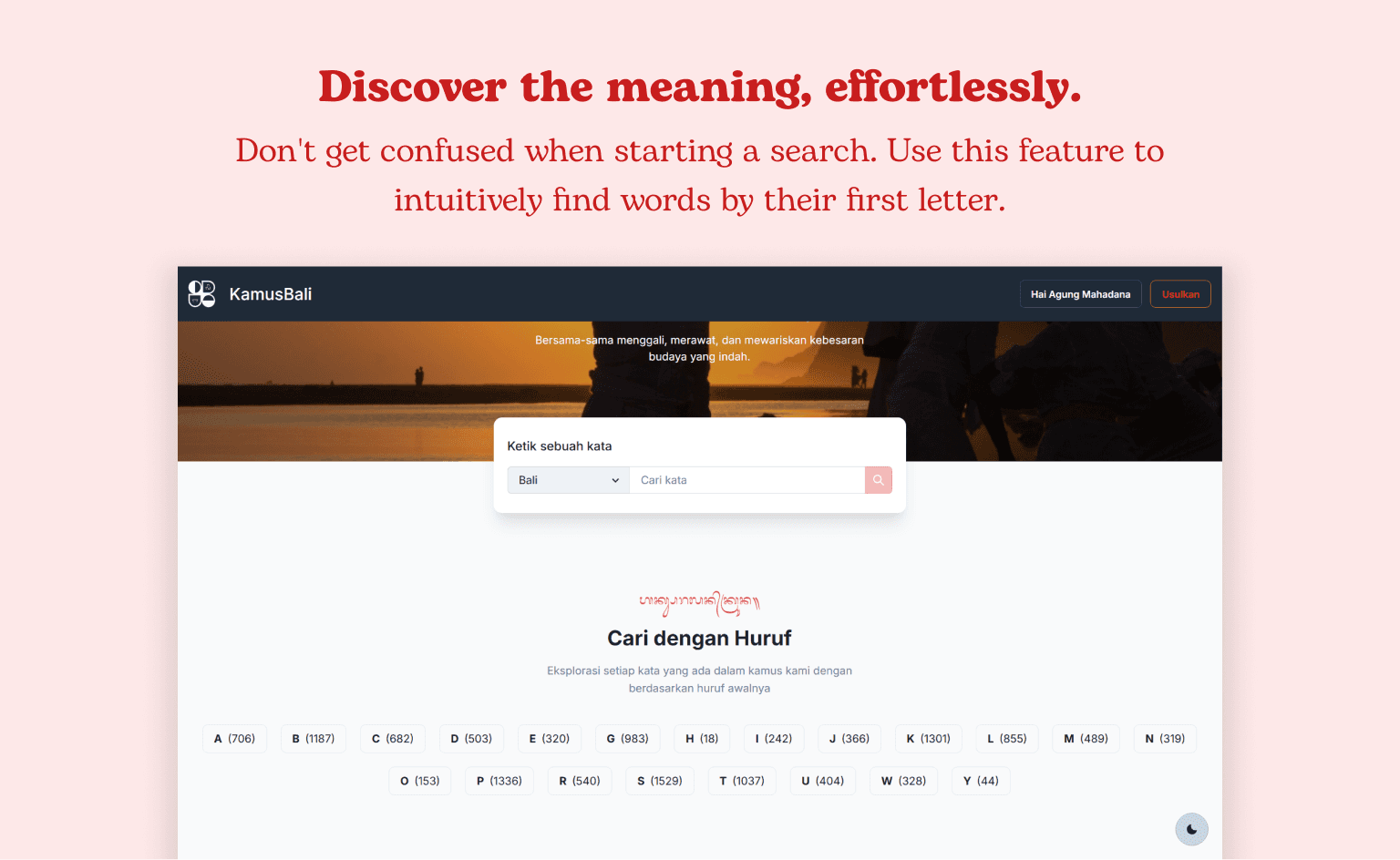
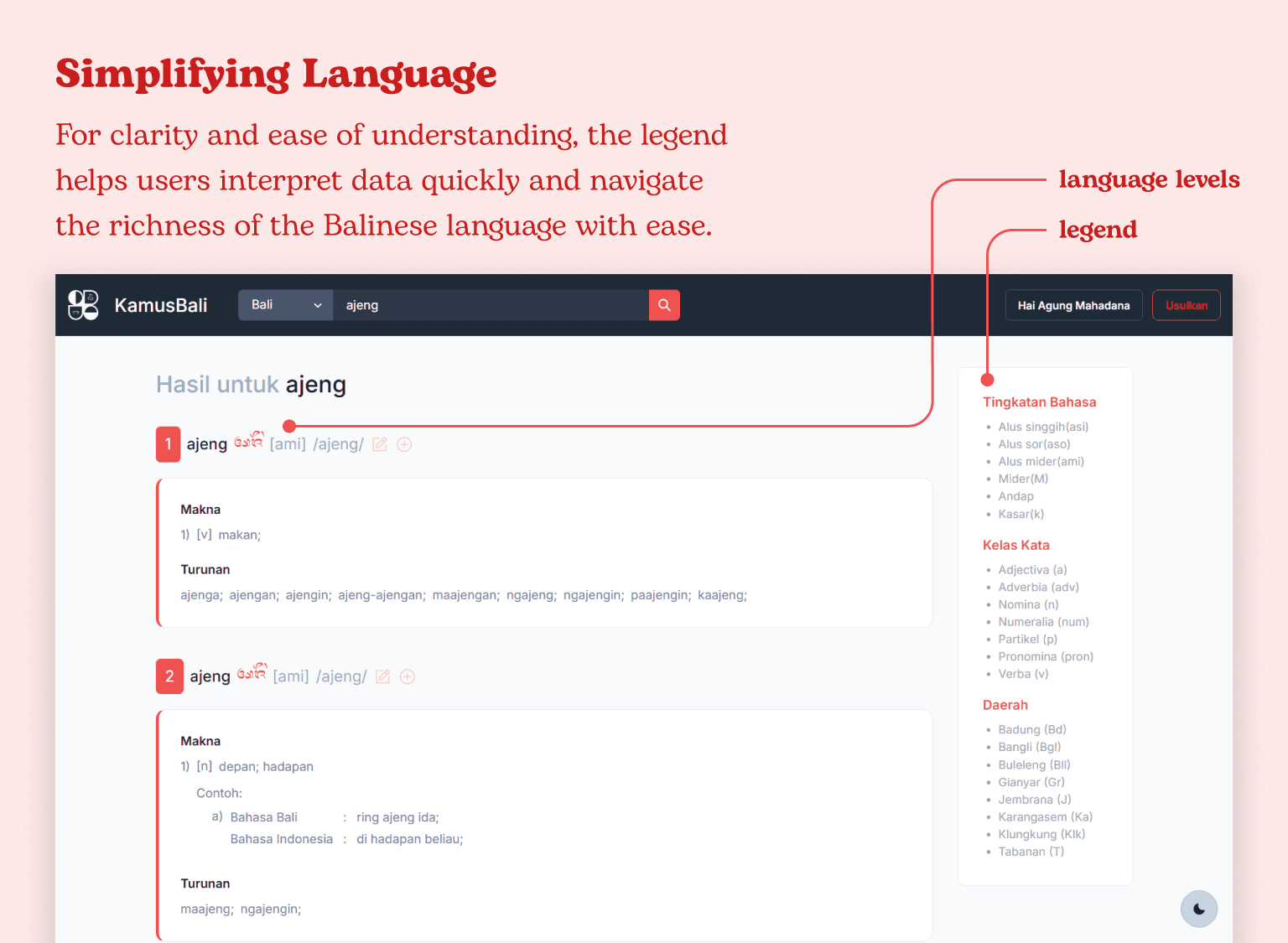
Of course, search
Allows users to search for words in Balinese and their meanings. In addition, users can also search by prefix letter.
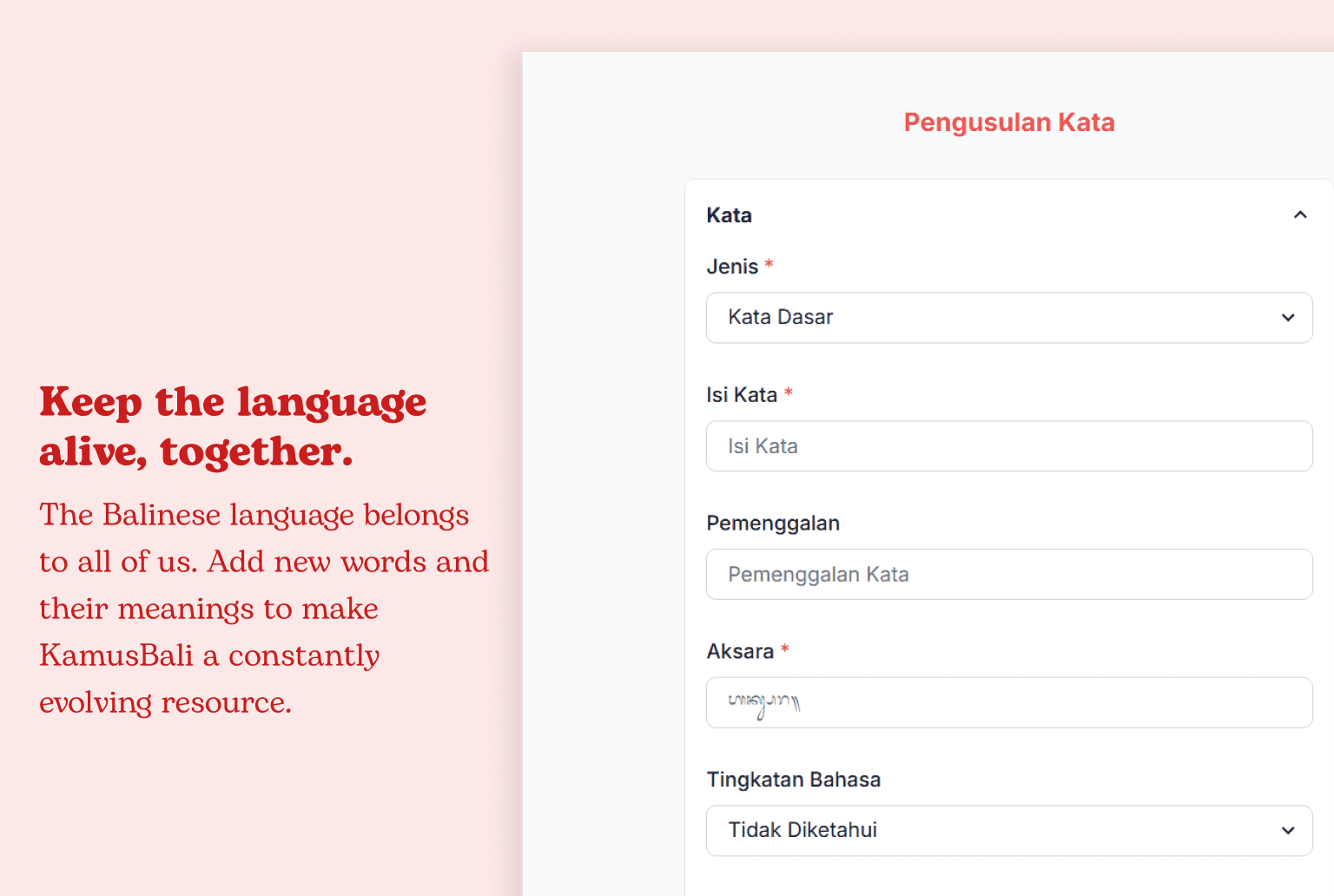
Community-driven word suggestions
Empowering the community is at the heart of KamusBali. This feature allows users to suggest new words for inclusion in the dictionary, making it a living resource that evolves with the language. Contributors can add details such as meanings, usage examples, and regional variations.
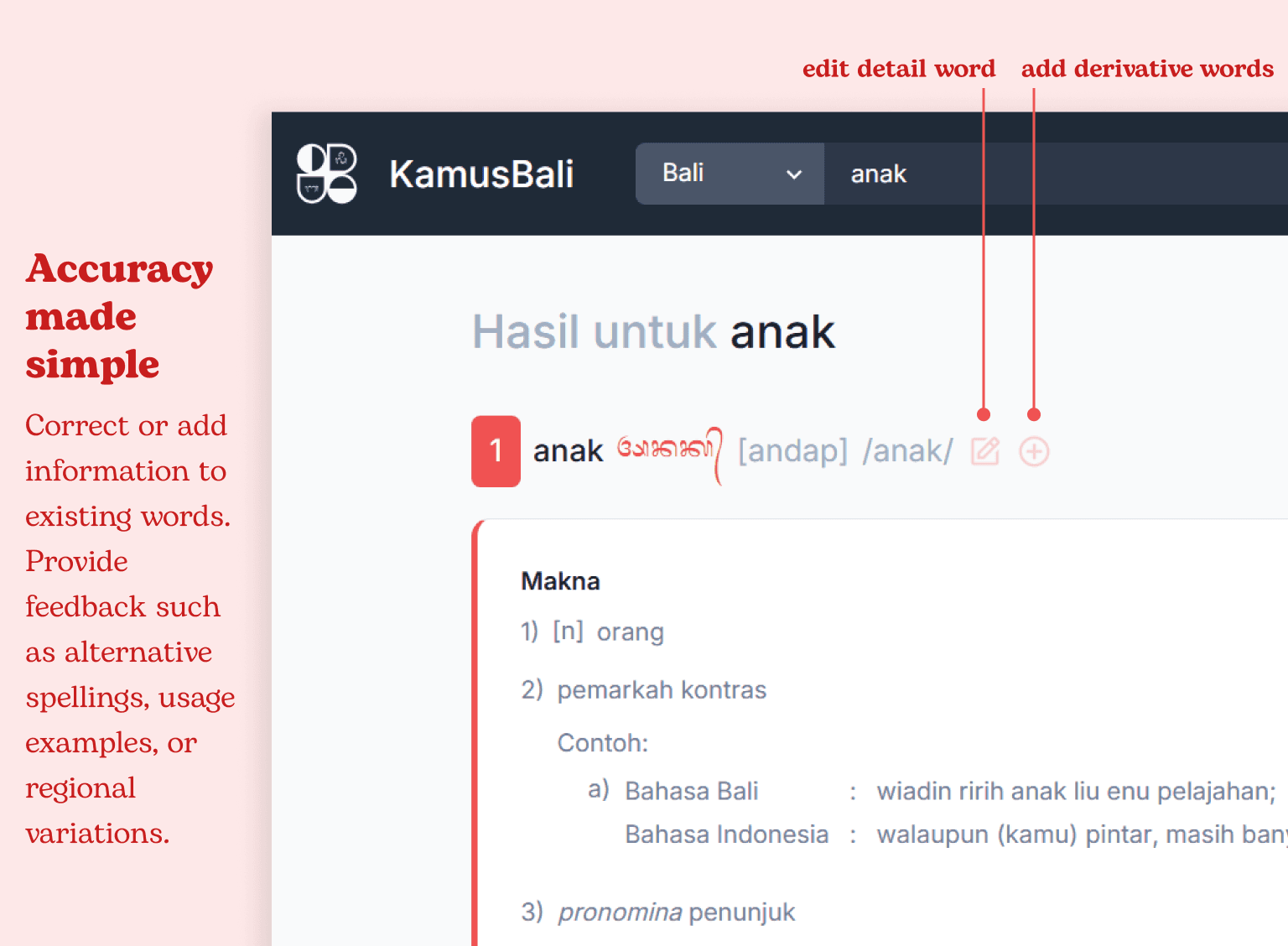
Collaborative word editing
The word editing feature allows users to suggest updates or corrections to existing entries. This ensures that the dictionary remains accurate and comprehensive over time. Users can provide detailed feedback, suggest alternative spellings, or add regional nuances.
Reviewer eyes
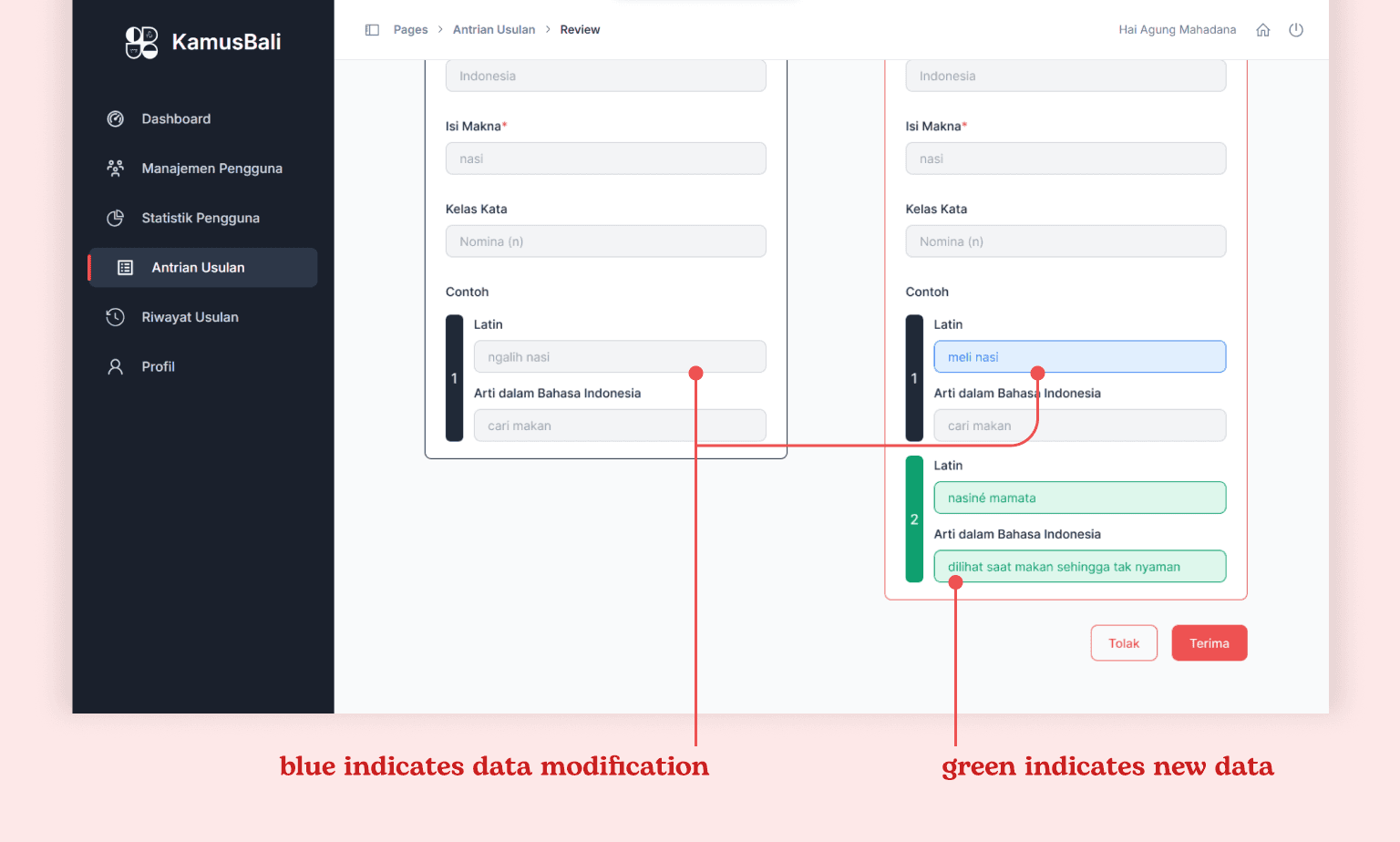
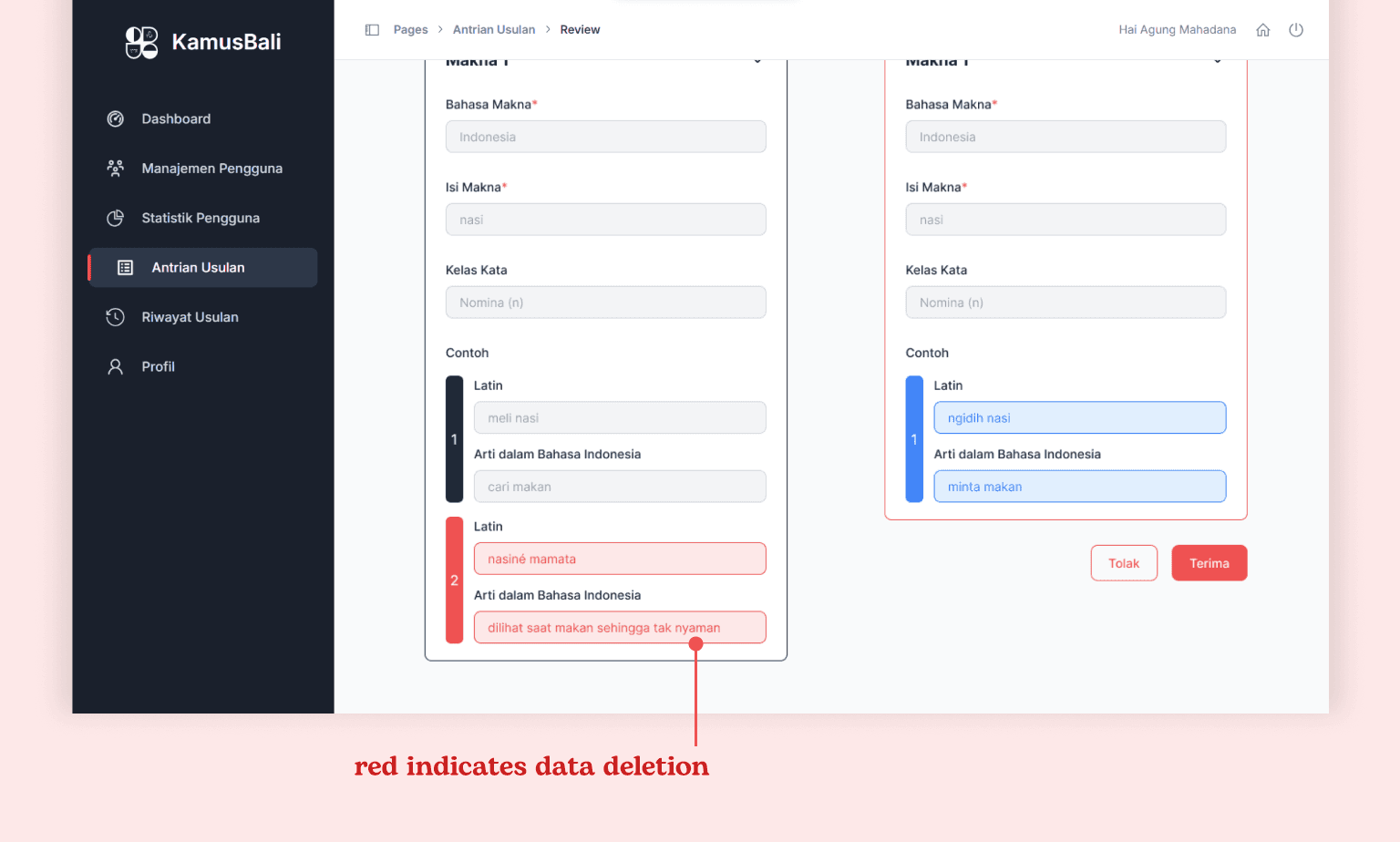
Dashboard is a dedicated tool for linguistic experts and community representatives tasked with validating proposed additions or edits. This dashboard displays a side-by-side comparison of the original entry and the proposed changes, making it easy to review and decide on the most accurate version.
Key takeaways
The process has deepened our understanding of the intricacies of the language and the cultural narratives embedded in it. By involving the community at every step, we've fostered a shared responsibility for the preservation of the language. One important lesson I've learned is to never underestimate tasks that seem easy. In building this platform, many aspects turned out to be more complex than anticipated, from understanding linguistic nuances to designing a seamless user experience.
Shotout to
This project would not have been possible without the dedication and talent of an amazing team. Thanks to Putu Widyantara (Product Manager) for being the guiding force behind this project. Tude Mahardika (Backend Developer) for managing the server side functions and database integration. Gung Krisna (Frontend Developer) for creating an intuitive interface that makes the platform a pleasure to use. Finally, a big thank you to everyone who has supported us behind the scenes, providing insights, encouragement and feedback.
🔗 Visit here: https://bali.cirhss.org/